Oct 2025
Operational since
Nawab Haider Colony
Nawabshah, Sindh
A reverse-osmosis plant with solar system, providing the colony with safe drinking water since October 2025.

Your kindness. Their tomorrow.
A year of turning generosity into care for families across Pakistan. Discover the people, the projects, and what we can make possible together.
Your impact at a glance
Your support funds clean water, medical training, hepatitis care and emergency relief. Here is what that work has achieved over time, followed by the money put to work in 2025.
What your support has made possible
Safe water starts with infrastructure communities can rely on.
Everyday access to safer drinking water for families across Pakistan.
Reported reduction in project areas. Results vary by community.
Cumulative clean water programme results reported by UKMAP. These are not totals for 2025 alone.
Medical students sponsored
Programme to date
Of sponsored students serve communities in Pakistan
Programme to date
Local NGO partners delivering and maintaining projects
Programme to date
The 2025 financial snapshot · Year ended 31 December
Total income
Year ended 31 Dec 2025
Spent directly on projects
86% of all expenditure
Trustee remuneration and paid staff
Year ended 31 Dec 2025
Programme figures are drawn from UKMAP’s published programme reporting; financial figures from the accounts filed with the Charity Commission for the year ended 31 December 2025.
From the field
Films from UKMAP’s project library. A closer look at the work your support makes possible; footage is not limited to 2025.
Water project in Dhamial · Tap a film to watch with playback and sound controls.
Foreword

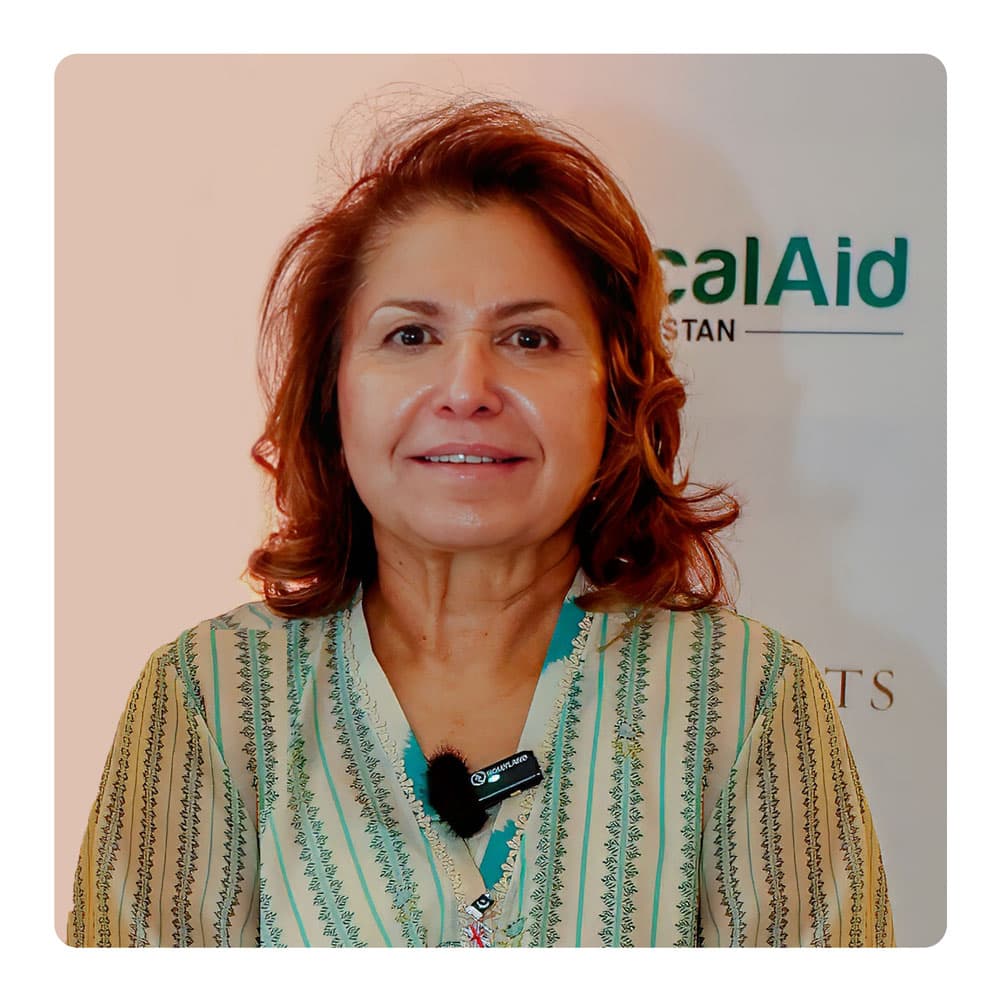
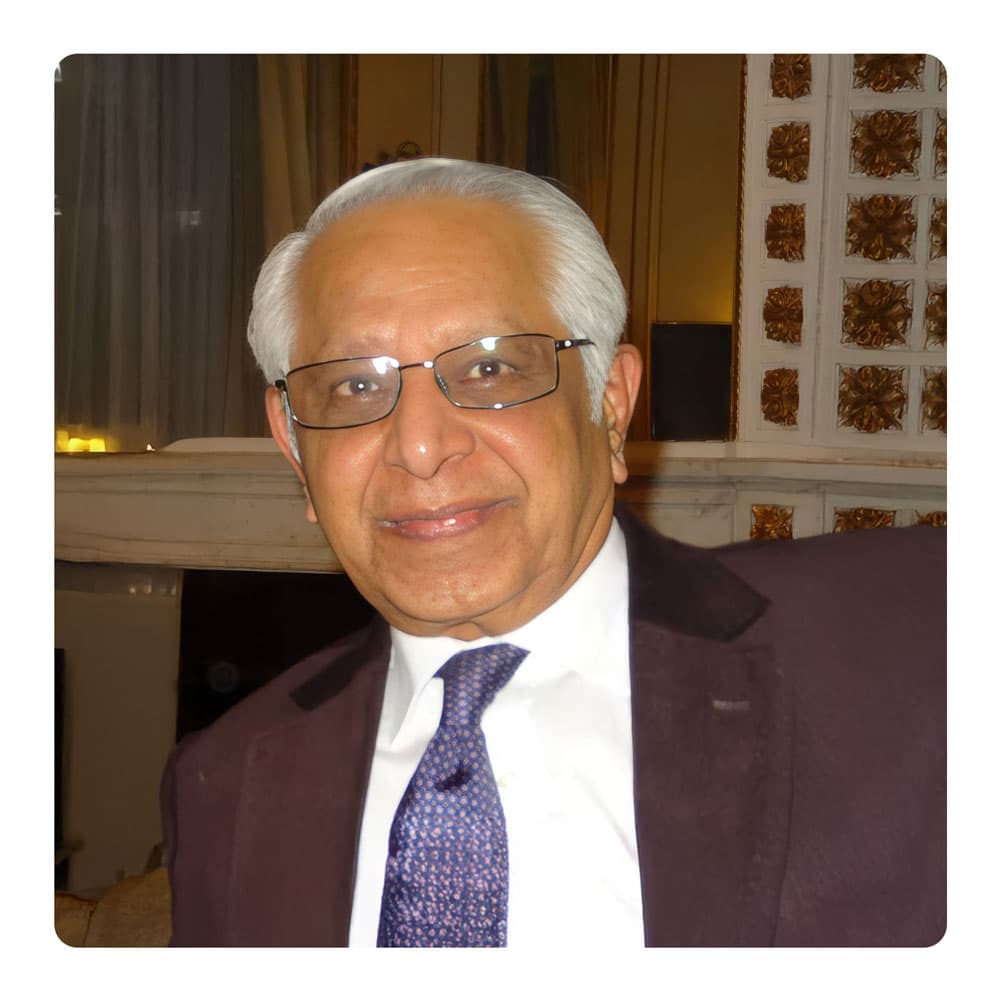
Todd Shea
Founder, Community Development and Relief Services (CDRS)
What sets UKMAP apart is not just its capacity to respond, but its commitment to lasting change.
It is a privilege to offer this foreword for the UK Association for Medical Aid to Pakistan (UKMAP)'s Annual Impact Report for January 2025 to December 2025. I have had the profound honour of witnessing the power of human compassion in action, from the frontlines of disaster zones to the quiet resilience of remote communities. Since 9/11 reshaped my life's purpose, I have been directly involved in humanitarian missions across the globe, from the tsunami in Sri Lanka to Hurricane Katrina, and from the earthquake in Haiti to the refugee crisis in Syria. But it is my work in Pakistan, a country that has become a second home, that has consistently reaffirmed my belief in the strength of partnerships.
In 2005, the same year I joined a group of Pakistani American doctors responding to the devastating Kashmir earthquake, the UK Association for Medical Aid to Pakistan (UKMAP) was founded with a similar mission. That moment of shared purpose has since grown into a steadfast partnership that has endured through floods, earthquakes, and the silent, ongoing crisis of contaminated water. Working together as a delivery partner on the ground, through Community Development and Relief Services (CDRS), I have seen UKMAP's commitment firsthand. We have stood side by side in Dera Ghazi Khan, distributing emergency supplies to families displaced by floods. We have brought life-saving filtration to communities like Sammon Rind in Tharparkar, where water contaminated with arsenic and fluoride has left thousands unable to stand upright. And in the remote reaches of Balochistan, we have rushed relief to families shattered by earthquakes.
What sets UKMAP apart is not just its capacity to respond, but its commitment to lasting change. It is one thing to provide immediate aid; it is another to fund the training of a midwife, sponsor a medical student who will return to serve their community, or ensure a water project remains functional for years to come. This is the kind of sustainable work that transforms not just individual lives but entire communities. It is the kind of work that gives hope.
As you read through this report, I hope you see not just figures and projects, but the faces of families who have been given a second chance. These are the mothers, fathers, and children who, because of your generosity and UKMAP's tireless work, can now drink clean water, access medical care, and look toward a future with dignity. This is the real impact of partnership.
On behalf of everyone at CDRS, I thank you for standing with us and with UKMAP. Your support has saved lives and built a foundation for a healthier Pakistan. Together, we continue to serve.
Message from the Chair

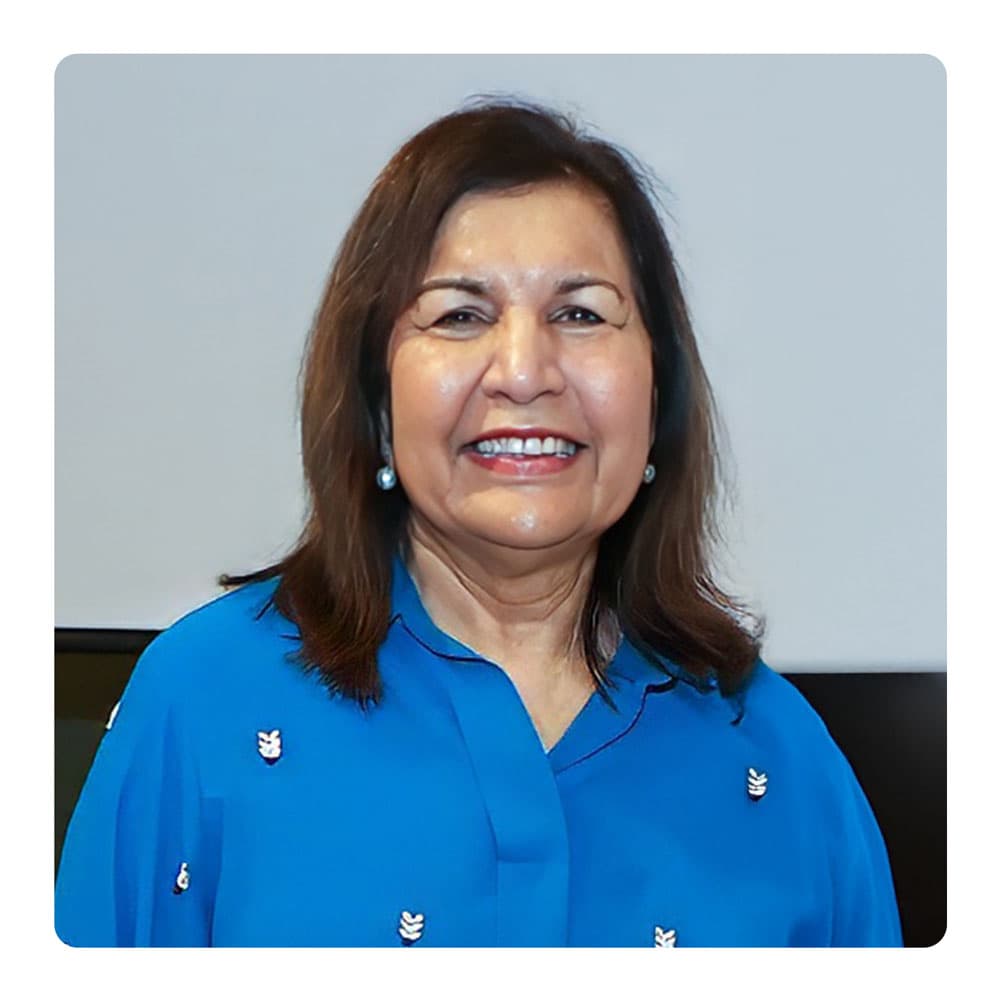
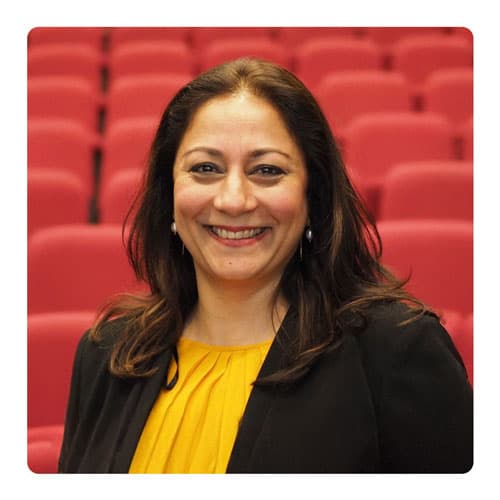
Zahra Shah
Chair of Trustees
It is with gratitude and pride that I reflect on what UKMAP achieved in 2025. The progress we made is a direct testament to the vision, dedication and collaborative spirit of our trustees, volunteers, partners and supporters.
I extend my deepest appreciation to our partners on the ground, including Community Development and Relief Services (CDRS). Your expertise, passion and generosity turned shared ambition into tangible outcomes for the communities we serve.
This report gives a full account of the year. From clean water projects and hepatitis prevention to medical education sponsorships and emergency relief, we built a foundation for sustained growth, and kept our focus on outcomes: the real changes we enabled for families, communities and health systems across Pakistan.
Our mission is clear: to relieve sickness, disease and poverty in Pakistan by supporting and strengthening the existing medical care system. In a year of economic complexity and rising humanitarian need, our resolve to serve the most vulnerable communities is stronger than ever.
We deeply value your continued partnership, and look forward to reaching further together in the year ahead.
Who we are
Founded in response to the 2005 Kashmir earthquake and registered with the Charity Commission in April 2008, UKMAP works alongside Pakistan’s existing healthcare system. We are governed by eight volunteer trustees, supported by a board advisor and an executive committee; no trustee receives remuneration, and we have no paid employees.
What differentiates UKMAP is its holistic approach: we do not treat one aspect of care in isolation but strengthen the whole healthcare ecosystem, through four connected programmes.
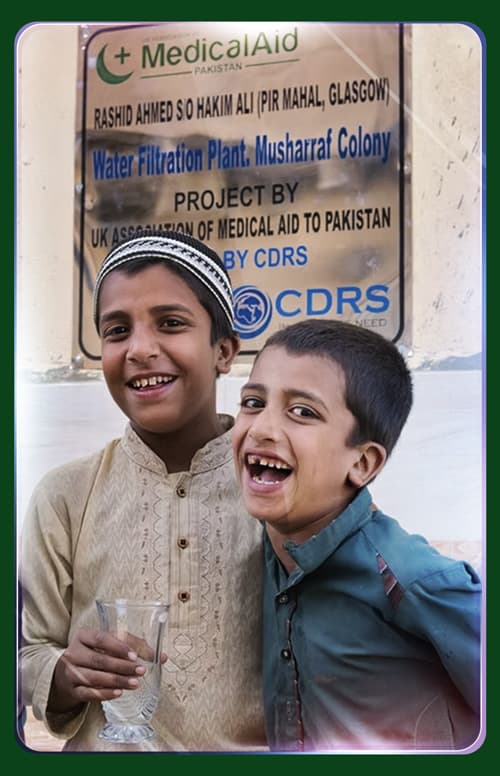
Solar-powered reverse-osmosis and filtration plants for communities affected by arsenic, fluoride and salinity contamination.
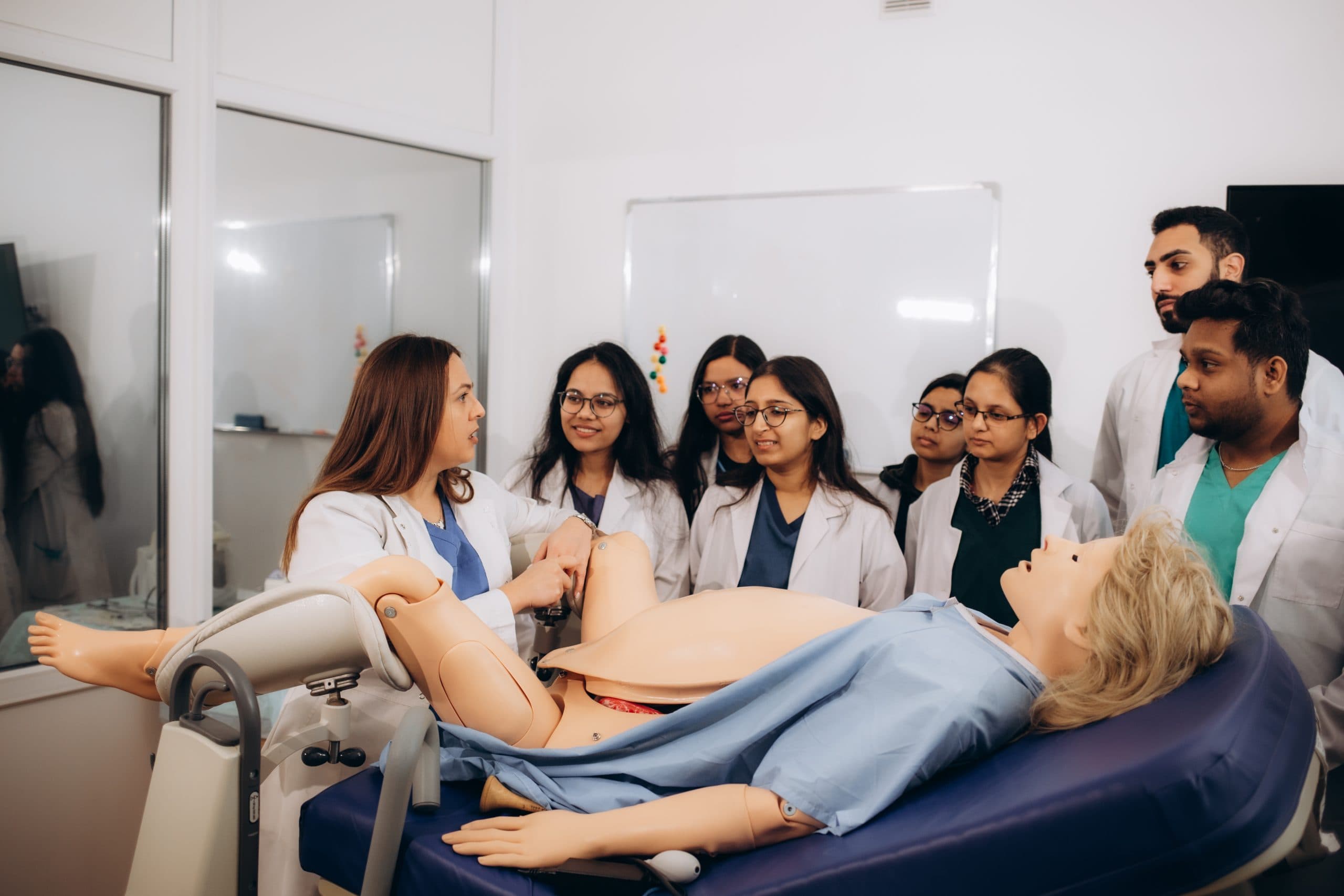
Sponsorship for medical students, midwives and health workers from underprivileged backgrounds, building a lasting workforce.
Awareness, free vaccination for at-risk groups and early treatment funding, with around £30,000 committed to date.
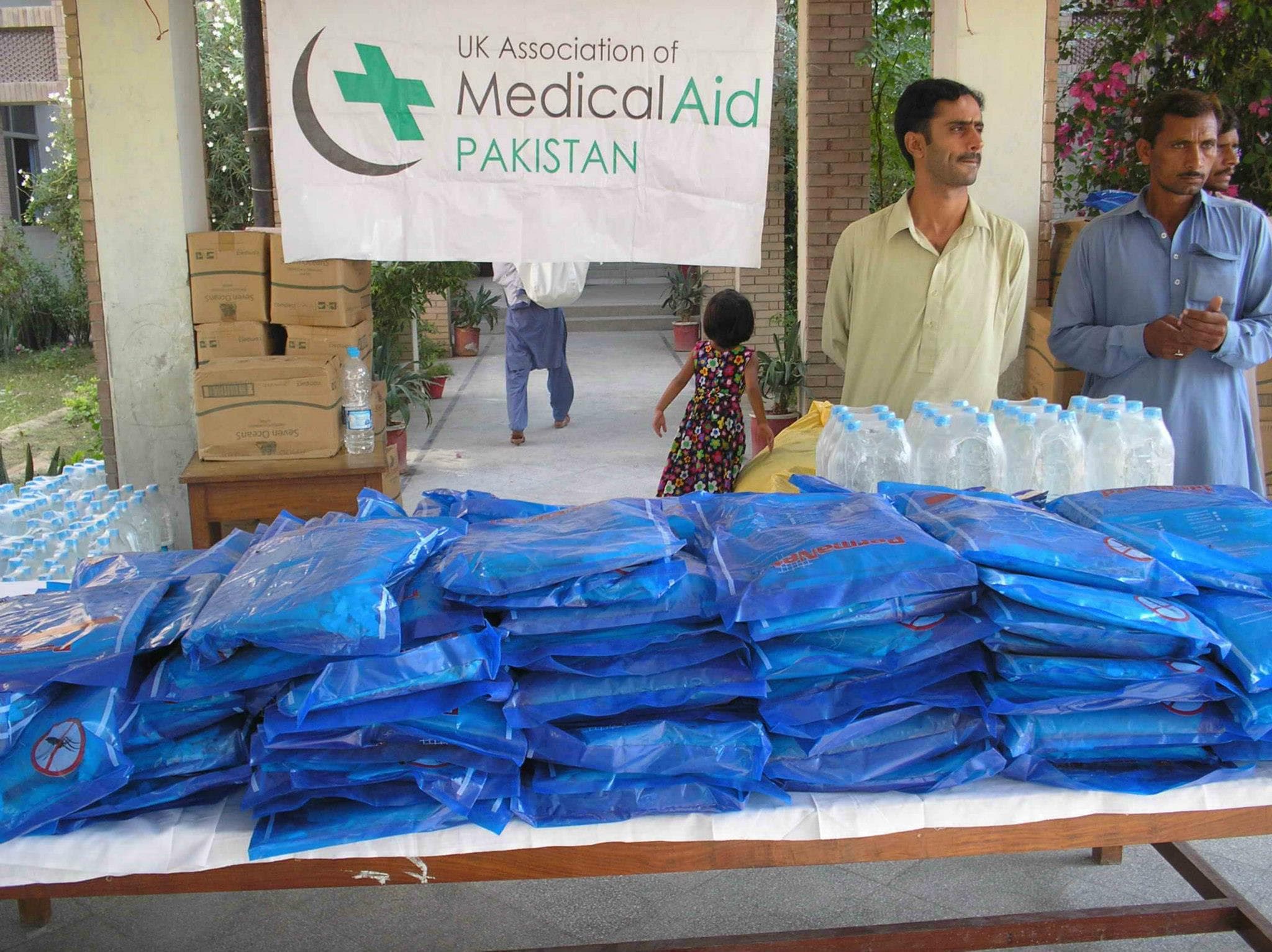
Rapid, partner-led response for families hit by floods, earthquakes and food insecurity: shelter, food, clean water and medical care.
Founded after the Kashmir earthquake
Registered charity in England & Wales
Volunteer-led, with no paid staff and no trustee remuneration
Where we work
Fourteen locations across six provinces and territories. Explore every project to date, including the plants completed in 2025.
Punjab
Clean water
Filtration infrastructure bringing safer drinking water to the Dhamial community.
Explore the locations
Programme locations from the report, across multiple years. Markers show approximate areas, not exact project sites. The wider report also references work in Gilgit-Baltistan and Azad Kashmir. Simplified boundaries are for orientation only. Map: Natural Earth.
Projects completed January to December 2025
These projects fall within the same January to December 2025 period as the finance section of this report. Each is a solar-powered reverse-osmosis plant, delivered jointly with our partner Community Development and Relief Services (CDRS).
Oct 2025
Operational since
Nawabshah, Sindh
A reverse-osmosis plant with solar system, providing the colony with safe drinking water since October 2025.
15 Dec 2025
Opened
Badin, Sindh
Given in the name of Allah and the last Prophet (PBUH) by a family who wish to remain anonymous, and dedicated to the late Mr Raja Mohammad Bashir.
2025
Completed
Sehwan, Sindh
One of our most recent clean water plants, funded by the family of a UKMAP supporter.
Our plant at Punnu Chandio, Badin, dedicated to the late Captain (Retd) Riaz ul Haq Mufti and Begum Zubaida Mufti, opened in December 2024, just before this period, and is recorded under projects to date.
Pillar one · Clean water and sanitation
Around 25,000 children under five die every year in Pakistan from waterborne disease, and over 70% of the rural population lacks a safe water source. Where the only water available carries arsenic, fluoride and salt, a filtration plant is not an improvement. It is the difference between illness and health.
We installed our first plant in Mardan in 2010 and have invested over £125,000 in water infrastructure since. Each unit is sited with a local NGO partner accountable for keeping it running, so the result is not a one-off delivery but a lasting supply.
of rural Pakistan lacks safe water access
the UN goal this programme is aligned to
people reached to date
01 / Install
Over 50,000 individuals reached with safe drinking water
Water Filtration Programme, installed across rural Pakistan
02 / Protect
Prevention of skeletal fluorosis and arsenic-related disease
Contamination-specific filtration for arsenic, fluoride and salts
03 / Maintain
Plants maintained and community-owned after handover
Partnership with local NGOs for sustainable project management
£120 could give a whole family lasting access to clean, safe drinking water.
Case study · Clean water
In a village 480km from Karachi, almost every resident walks with a bent spine. The cause is the water.
The situation
Sammon Rind, in tehsil Chachro, Tharparkar, is home to more than 3,000 people. Nearly all of them suffer severe spinal deformities and cannot stand upright. The only drinking water available to the village is contaminated with arsenic and toxic levels of fluoride and salts, a chemical burden that deforms bone over years of exposure.
Our response
UKMAP is committed to installing filtration capable of removing these toxins at source. Filtration prevents further health complications for children who have not yet been exposed, and restores dignity to families who have carried this for a generation.
Why it matters
Skeletal fluorosis is irreversible but entirely preventable. Every year a community waits, another cohort of children is exposed.
residents affected in one village
from Karachi, the nearest major city
Contaminants
Pillar two · Medical education and training
Pakistan’s doctor-to-patient ratio remains well below WHO recommendations. UKMAP sponsors talented students from underprivileged backgrounds through medical education, and funds midwifery training where maternal care is thinnest.
With CDRS, UKMAP supports a fully functioning hospital providing prenatal and postnatal care, vaccinations, treatment for common illness and emergency care, reducing maternal and infant mortality in a remote, underserved region.
Sponsored students study at institutions in Pakistan and abroad, with structured mentorship from UK-based clinicians among our trustees and supporters. A formalised mentorship programme is a 2026 priority.
Pillar three · Hepatitis prevention and treatment
The World Health Organisation identifies hepatitis as the second-largest health challenge Pakistan faces. UKMAP’s approach is deliberately unglamorous: awareness first, then vaccination, then early treatment before disease progresses.
Community education campaigns
Explaining causes, transmission, prevention and treatment in communities where stigma keeps people from testing.
Outcome: Reduced stigma and increased uptake of testing.
Free Hepatitis B vaccination
Targeted at newborns, healthcare workers and at-risk families.
Outcome: Prevention of mother-to-child transmission and reduced community spread.
Funding treatment at diagnosis
Life-saving treatment funded for people newly diagnosed.
Outcome: Disease progression prevented, complications and household costs avoided.
Why prevention wins
A vaccination costs a fraction of a treatment course, and a treatment course costs a fraction of a family’s collapse into poverty. Every intervention earlier in the chain protects more people for less.
Pillar four · Emergency relief and disaster response
UKMAP does not run its own field operation. We fund and direct trusted partners (CDRS, IDSP and local organisations) who can reach families within days and account for every item delivered.
Working through CDRS, UKMAP funded immediate support for displaced families as floodwater cut off the region.
2,000 water bottles · 50 tents · clothing, flour and bedding for a further 50 people
15,000 people remain displaced in the region. The need has not closed.
In Mashkel, Washuk district, closer to the Iranian border than to Quetta, UKMAP funded relief delivered with IDSP after a 7.8 magnitude earthquake.
Tents · grocery supplies · water purification tablets and ORS · mosquito nets
Needs were identified with community representatives before procurement began.
With CDRS, family food packs were distributed to deserving households in Usta Muhammad, Balochistan, and Abbottabad, Khyber Pakhtunkhwa, giving food security to families facing extreme hardship during Ramadan.
Two provinces · delivered with CDRS
Fundraising and events
2025 saw us rebuild the fundraising base: a new website, active social channels, a regular-giving proposition, and supporters running their own appeals through Enthuse.
An evening of dinner and live music in aid of clean water, food support and healthcare across Pakistan. The 2026 gala takes place on Saturday, 10 October 2026 at the London Marriott Hotel Grosvenor Square.
About the galaSupporter fundraiser
£5,000raised by a 14-year-old supporter running 100km for Clean Water, to fund a reverse-osmosis unit.
Regular giving
Monthly gifts let us commit to long-term work such as water plants and multi-year training, and cut the fundraising cost of each pound raised. Donations are processed by Enthuse with Gift Aid claimed where eligible.
Finance
In the year ended 31 December 2025, UKMAP spent £88,792 against income of £41,825, funding project commitments from reserves built in earlier years. Reserves remain positive, and diversifying income is our first priority for 2026.
| Donations | 34,352 |
|---|---|
| Gift Aid | 7,473 |
| Total income | 41,825 |
| Charitable projects | (76,522) |
| Cost of generating voluntary income | (12,272) |
| Total expenditure | (88,792) |
| Net movement in funds | (46,967) |
| Funds brought forward | 100,637 |
| Funds carried forward | 53,668 |
How we spent it
of every pound we spent in 2025 went directly to charitable projects.
No paid staff or trustee payments
No trustee received remuneration, payments or benefits. Secretarial support and administration cost £4,852.
Charity status
Registered in England and Wales, no. 1123929, registered 30 April 2008 (previously Medical Aid to Pakistan). Recognised by HMRC for Gift Aid.
No trading subsidiaries
The charity holds no trading subsidiaries and no restricted-fund deficits.
Source and prior years
Figures as filed with the Charity Commission for the year ended 31 December 2025; accounts and annual returns are publicly available on the Register of Charities. Our published project accounts record project spend of £66,081 in 2022 and £99,048 in 2023; the 2024 figures will be added once confirmed.
Governance and our people
The Board oversees strategic direction, financial management and governance, meeting its obligations under Charity Commission regulation. Programme delivery is carried by a volunteer network in the UK and partner staff in Pakistan.
Board of Trustees
Eight trustees overseeing strategy, finance and governance, with a board advisor and executive committee. No trustee is paid.
Volunteer network
UK volunteers run fundraising, communications and administration. UKMAP has no paid employees.
Regulatory compliance
All governance complies with Charity Commission requirements; accounts and annual returns are filed publicly.
Challenges and lessons learned
An honest account of the year matters more to our supporters than a flawless one. Four constraints shaped 2025, and each has changed how we will work in 2026.
Resource limitations
Limited income constrained our ability to scale programmes to the demand we saw.
Lesson: Diversify funding sources and grow regular giving.
Geographic reach
Remote and underserved areas such as Tharparkar and Washuk remain the hardest and slowest to reach.
Lesson: Deepen partnerships with organisations already embedded locally.
Impact measurement
Early-stage metrics collection was informal, which is why parts of this report cite programme-to-date rather than single-year figures.
Lesson: A refined KPI framework has been implemented for 2026.
Awareness
Too few potential donors know UKMAP exists, despite twenty years of delivery.
Lesson: Expand digital presence and publish field content consistently.
Looking ahead
We enter 2026 with a clearer measurement framework, a rebuilt supporter base and a deliberate focus: expand what demonstrably works, and fund it predictably.
Reach more communities affected by arsenic, fluoride and salinity through new filtration and purification installations.
Sponsor more students from underprivileged backgrounds, and formalise the mentorship that keeps them in practice.
Build the standing capability to respond faster to floods and earthquakes, with pre-agreed partners and procurement routes.
Grow regular giving and partnership income so project commitments no longer depend on drawing down reserves.
Give today
Every plant installed, every student sponsored and every food pack delivered in 2025 began with someone choosing to give. If this report has shown you something worth continuing, here is how.
These amounts illustrate what your gift could support. Choose your amount again on Enthuse; these links do not preselect an amount or restrict your gift to a programme.
Processed securely by Enthuse, with Gift Aid claimed where eligible. Monthly giving lets us commit to long-term projects with confidence.
Registered charity
UK Association for Medical Aid to Pakistan
Charity no. 1123929
England & Wales
UKMAP Annual Impact Report · January to December 2025